Showing posts with label nursing. Show all posts

Wednesday, August 7, 2013

So far so good...

This week marks my third week of orientation. It has been a very challenging but enjoyable process. I have encountered very complicated patients and worked diligently to heal and comfort side by side with my preceptors.

A few things that have been of interest in the last 3 weeks:

  • Although I am in a medical ICU we are apparently referred to as the CCU (coronary care unit). Why this is no one seems to know. And our surgical ICU is referred to as just the ICU.
  • I worked with my first balloon pump. Although I will not have a balloon pump patient for probably 2-3 years (they require specialized training)this was a very interesting experience. We literally did not leave the bedside for 12 hours at a time because it is such a delicate and dangerous piece of equipment.
  • I worked with a  Swan Ganz catheter, though not a common piece of equipment anymore, it is still seen in critical care occasionally. This is also a delicate and potentially dangerous piece of equipment, but one that I could be working with in the future. I took my first PAWP (that stands for pulmonary artery wedge pressure), where a balloon on the Swan Ganz cathether is inflated inside the pulmonary artery (the artery with deoxygenated blood that travels from the heart to the lungs to pick up oxygen) to capture the approximate pressure inside the L atrium of the heart. This was a terrifying/thrilling moment in my life crystallized by the fact that I had an audience that included not just my preceptor but a handful of nurses from the unit that wanted to come see a Swan Ganz cath.
  • We are the only nurses that get floated outside of the hospital. Apparently if the Meridian St. Luke's is short staffed we can be sent over to help. This is quite different from floating to another unit in the SAME hospital and unfortunately requires a car.
  • I completed my second telemetry course. This time it was partially online with the American Heart Association and partially done with a real human being. It was excellent, but also provided a sense of accomplishment because I had real life examples to base my questions on. I also realized that all those squiggly lines have become somewhat second nature to me and the class did not feel overwhelming like the first time.
  • I started the ECCO (electronic critical care online) program through the American Association of Critical Care Nurse (AACN). This has been a challenging and rigorous course, but completely applicable to my work. I feel like I am in nursing school again, but at least I get a paycheck with it and a lot less tears ;)
  • We are officially moved into our new home! I'm a mile from the hospital, 2 blocks from hiking trails, and 1 mile from downtown. On Saturday I went paddle boarding on the river with a coworker from the SICU and her husband and we finished the day at Boise Fry Company (the yummiest fries I have ever eaten). It felt like a "typical Portland day" and I slept the best sleep I've had in half a year. It was awesome.
Off to unpack some more boxes...



Wednesday, July 24, 2013

Top 10 favorite things of week one in the MICU


10. The hospital food is edible.

9. The IV pumps are the same as my previous hospital so when they go into a frenzy of beeping I now know how to fix them!

8.I will not develop carpal tunnel because we do paper charting ...and Epic, the electronic charting system, is going to roll out in X number of years.

7. My unit it known for "having all the comedians"

6. The ICU is unlocked - this means families can come and go as they please making the patients and nurses much happier!

5. Nurses get to self schedule!

4. There is soft serve ice cream in the cafeteria for when you have one of the those days.

3. When you admit a patient to the unit there are so many people helping you have to start kicking them out. Seriously!

2. My preceptors are amazing, knowledgeable, supportive, and nice. The staff nurses are inclusive, kind, and have a great sense of humor...and Wednesday nights are waffle nights!

#1. The hospital provides scrubs!!! My laundry basket is both cleaner and lighter!

Thursday, June 20, 2013

Achy breaky back


After 6 wonderful years of living relatively pain free from chronic aching back pain (as long as I'm not sitting down) something happened to my precious spine. I am blaming it on the day shift hours I picked up this week!!!

I woke up Tuesday morning with 8/10 pain- burning, sharp pain- radiating from my lumbar spine outward in all directions. Sitting, standing, lying down, sneezing all brought new sharp sensations of tortuous pain I had no idea even existed. Putting on pants was like being put through a version of a Spanish Inquisition interrogation - I would have admitted to anything to have had the pain just stop. Thank goodness for slip on shoes at least, I may of never left the house otherwise.

I called the chiropractor and waited with clenched teeth, yoga stretches, an electric heating pad, and a bottle of Aleve for my Wednesday appointment. The appointment went well, apparently my L5 vertebrae was out of place and since muscles can be slow to respond to change I've got another 2-3 days of hurt ahead.

So, here I am now, Thursday morning, down to 4-5/10 pain post adjustment with a new back brace, more Aleve, and a rice pack heating pad just wondering how the next 3 nights of work are going to go...

Tuesday, June 18, 2013

9 more nights to go...

This week I was caught off guard when the staffing office called and asked me to work part of a day- not a night-shift. I caved and said yes to coming in since they had already exhausted the day shift roster and were in need for help.

I worked from 1500-2000 essentially and suddenly remembered why I have come to dislike day shift. Even though there are tons more people on the floor they are all as frantically busy as you and unable to help you if you need help, as well as vice versa. I can't even be helpful to my coworkers because I'm running around like a loon. 

After a 4 hour shift I was SO incredibly tired. It was quite stunning and when I got home all my ambitions for packing more boxes evaporated as I turned into a slug and melted into a chair.

I am slowly wrapping my head around 5am mornings again as my first 3 months on orientation will be on days at the MICU. In the mean time, I have 3 weeks and 9 nights to go at the IMCU and many more boxes to pack!


Sunday, June 9, 2013

Announcement: Ch-ch-ch-changes!

Dear friends and family,

June is already upon us and some more changes with it! The summer heat, rattlesnakes, and tired dogs are in full swing here in the Magic Valley.

Recently my husband got a promotion indicating that he is going to be travelling more often. With this information and the fact that his company was dismayed at how far away Twin Falls is from a large airport it was decided we would be relocating to Boise!

Initially we were discussing the idea of moving to Boise and to have me commute the 2 hours to Twin Falls for work, but upon talking to my manager it actually turned out to be incredibly easy to transfer from Saint Luke’s Magic Valley to Saint Luke’s Boise (downtown). Furthermore, I will be moving from the intermediate care unit (IMCU) to a medical intensive care unit (MICU) where I will be brought on as a new nurse in a formal new nurse residency and given lots of support and education to flourish in the more critical/stressful environment. 

Although I will definitely miss my IMCU because of all the wonderful skills I built there and the BEST coworkers a new grad nurse could ever ask for – we are really excited to be moving to a place that meets our wants and needs in a community.

Additionally, this week we had an offer accepted on an adorable bungalow in downtown Boise. The location is perfect – both my husband and I will be able to bicycle or walk to work (my honey, having got a taste for having an office outside the house, will be finding a downtown office space), there is a park 2 blocks from our house, and the farmer’s market is within minutes by bicycle. 

We have been struggling since leaving our wonderful community in Portland and it seemed that Boise would offer a balance for us in terms of family, community, “bikability/walkability” all the while being both affordable and best for our careers in a way that may not have been possible in Portland (e.g. my husband can have an office outside the house due to affordability, I can be in an ICU with less than 2 years experience!!!).

To our dearest Portland friends – we still miss you dearly and we love you SO much. We missed every week without game night. We are so excited to be 2 hours closer driving and when we come back to visit we will be so much more fun to hang out with now because we will be more settled in our lives here in Idaho. Now you all have to come out and visit because we have our own set of breweries to show off and new biking trails, rivers, and ski hills to explore! ;)

To our families – thank you for bearing through the multitude of plans we kept trying to make and through our mourning period over the past 6 months. You made the hard days a little better and we love you for sticking by us in our worst moods. We are so happy to share our new home with you and even happier that we will be good company once more instead of your whiny children.

Again, thank you all for your love and support and we look forward to seeing you in Boise! I will continue my blogging adventures as my nursing career continue to unfold.


Tuesday, June 4, 2013

A rattling tail of a story

On my hiking adventure this week I was in the lead of our small hiking group with Roxie on her leash and following me and my coworker a few paces behind. The path at the time was gravel and we were down in a small ravine with a mix of wildflowers and sagebrush on the left (the uphill side of us) and lush grasses and choke cherry trees to the right (the downhill side of us) next to a creek. 
Beautiful, wildflowery day
My coworker and I were talking as we hiked, mostly about how the hike was going since we had completely misread the map and were somehow on mile 6 of what was supposed to be a 3.5 mile hike. My left foot was coming down next to a sage brush bush and out of the corner of my eye I saw the ground below it move and then I heard the infamous warning rattle like a "tsh-tsh-tsh-tsh-tsh." 

My body and it's primal fight-or-flight instinct reacted eons before my mind was able to catch up and process what was going on. Instead of putting my left foot down on what was a coil of a snake's body, I pushed off my right foot and leaped in an Olympic style fashion probably a good 4 feet ahead all the while dragging Roxie with me.

I hollered for my coworker to stop and from the sagebrush bush we heard the rattle again and a rattlesnake's head pop out from below the bush to peer at us. I generally have no problems with snakes, but this was my first encounter with a poisonous one. Thankfully the snake and I had mutually scared the pants off each other that Monday afternoon and both reacted by running/slithering in opposite directions. The snake looked at us for probably about a minute deciding which way to go, and then turned up hill while shaking it's rattler at us as it headed up the hill. I am so incredibly thankful I did not get bitten!

Not my photo---but about the right size

Things that I learned from this heart thumping experience:
  1. Always pay attention to where your feet are
  2. I will never hike alone and whoever is with me better have a medical degree of some sort
  3. I have no clue how to treat a rattlesnake bite in the field-so now I've looked it up
The do's and don'ts of treating a rattlesnake bite according to Backpacker Magazine:
  • DON'T
    • slice the bite mark to try to suck out venom: you are creating a wound site for infection
    • suction the area: you aren't going to get any venom out anyway since the it has already started pumping through your system since your heart rate accelerated from the situation
    • apply a tourniquet: it will concentrate the venom in one area and accelerate cell death in that one place. It's actually better to let it get diluted through your system.
    • apply an ice pack (who is carrying one of these while back packing anyway?): the cold will slow the circulation to the area (much like a tourniquet) and concentrate the cell damage
  • DO
    • Get medical attention as soon as possible
      • An antivenom will be needed to treat the patient. 
      • Interesting fact: rattlesnake antivenom is made from the serum globulins from horses that are immunized against many different species of snakes
    • Remove tight fitting clothes/jewelry: this in preparation for swelling
    • Clean the bite area: with soap and water or an antiseptic from a first aid kit
    • Carry the victim (or yourself) out slowly: Ditch the backpack, you don't need to make your body work any harder
    • If you have a pen: mark the swelling area every 15 minutes. This helps doctors guess the amount of venom in the bite
      • Interesting fact: about 20% of bites don't have venom injected by poisonous snakes and are considered "dry" bites


Tuesday, April 23, 2013

Pulmonary embolism & deep vein thrombosis

In recent weeks I've had new encounters with pulmonary embolisms (PEs). So, this post is to explore the origin of this condition and what it looks like.

First off, deep vein thrombosis (DVT) refers to clots that form in the veins of the legs. DVTs are often the cause of the pulmonary embolisms. Normally, the blood in the veins is pumped back to the heart by the leg muscles that 'milk' the veins through contraction. However, clot formation occurs when a person is on bed rest or is inactive (like mentioned above - long car trips or long hours at a desk). In the hospital a lot of attention is paid to preventing DVTs; patients that are in the hospital post surgery or are on bed rest for more than 24 hours are automatically given heparin, an anticoagulant, that prevents clotting.

These clots when they do happen can break off from where they have built up within the leg veins. The clots then travel to the heart and get pumped out to the lungs - getting lodged and causing a pulmonary embolism.

Again, pictures are worth much more than my words so here is a quick video that illustrates the phenomena of DVTs and PEs:


It's also worth noting, this can occur in any age group. In March 2011, the athlete Serena Williams had a foot surgery in New York and then traveled to Los Angeles, where shortly afterward she had to be rushed to the hospital for a PE (Serena William Hospitalized for Pulmonary Embolism). 

So remember to get up and move around to keep your legs and lungs lively!

Bedside manners matter

Today was my turn to be the patient. I went to a routine OB/GYN appointment only to be horrified at how unkind the doctor I had was. I really shouldn't be surprised, I see doctors misbehave all the time. However, since I was the patient, I really took it personally this time. I left the appointment nearly in tears at how cruel this MD was. And in clinics you don't even have a nurse to back you up!

Everything I said was interrupted and worse was that my doctor argued with me. There is a difference between educating a patient and dismissing a patient. Unfortunately I got the latter treatment because my doctor couldn't keep their mouth shut long enough to listen to my actual concerns and to find out why I had these concerns.

After a long drive home and a nap it really just reminded me how thankful I am that I get to be in my patient's rooms when the MD comes in. Often I do the emotional clean up post doctor visit such as when they deliver frightening news that a patient has to have a critical surgery or a patient will have to have dialysis for the rest of their life. My patient's often end up in tears too and it's unfortunate it has to be this way.

There is no doubt that MDs are the harbinger of bad news in most cases, but there are those who succeed in their communication. They grab a chair and sit eye to eye with a patient. They are comfortable around emotion and tears. And they shut up and listen. These are the doctors that succeed in bridging the gap between medicine and humanity. These are the doctors that patient trust.

Now I just need to find myself one of those....

Monday, April 8, 2013

A blissful week - I'll take it!


"Gifts have ribbons, not strings" ~Vanna Bonta

This week was gift-like. I am doing my first 3 on/1off/3 on run of work days. I don't know if it's the seasonal change, but my first 3 nights thus far have been delightful patients. On my third night I had one patient all night and reveled in doing a lot of teaching and putting together an informational packet in Spanish for them to better understand their new condition.

Meanwhile, my coworker and I were spying on the ER waiting room (we can see the waiting room from our patient rooms) and it was packed. We savored the quiet we were enjoying, but also anticipating getting slammed with admits. Somehow, not one patient came to the IMCU - and we did a dance for joy to be skipped over this week.

Now onto the next set of 3 days!

Nights like the Exorcist

The last few weeks have been fast paced with lots of cardiac patients and renal patients, and a handful of some crazy patients that require the whole nine yards of 1:1 sitters, restraints (had my first experience with leather restraints recently), and anti psychotic meds that really sometimes don't seem to do anything initially. To top it off somehow these wild patients always end up in the same room number and now I shudder at group report when I get that room number!

I had a 2 night stretch recently with the a patient where the 1st night sounded like scenes of the Exorcist movie were emanating from within the room and by the second night the medications had caught up to my patient and calmed them down beautifully. By the end of that week I was exhausted - mentally, emotionally, psychologically. It's traumatizing to use restraints for everyone involved. I feel like it took several weeks to recover from that patient particularly.

At the end of the 12 hour shift I really struggle to clear my mind enough from an experience like that so I can sleep and do it all over again that night. I maintain my compassion with these patients, however, it's sometimes hard to do when ducking flying limbs or more recently had a patient grab my stethoscope that was hanging around my neck and being called every name under the sun. My heart breaks for these people - what a frightening experience - and yet it is simply exhausting. That's why days off are necessary for this job - so I can recharge my batteries and my compassion and remain a good, caring nurse.


Thursday, March 28, 2013

Kidneys: the water treatment plant of your body


It seems some things come in waves. A few weeks ago every time I got an admit it was a GI bleed, in the last 2 weeks it's been kidney/renal problems. 

For some reason I find kidneys to be mysterious organs - maybe it's because it seems like they are hiding back behind the rest of the organs like they have a secret? Or the fact that you have 2 of them, but can live with 1? Anyway, I thought it was a great opportunity to review the basics. 

First, this short 45 second video is a great big overview of the kidney (plus the English accent is funny- especially the word for capillaries):


All right, so we know the kidneys produce urine. But that's not the only thing you kidneys do!

Here are some of the other very important and necessary functions of kidneys:

Excretion of waste:
Kidneys remove waste produced by your body's metabolism. Major waste products would be urea (that makes up uric acid) and nitrogenous wastes. To much of either of these waste products does intense damage to the body and brain. Often times in renal failure people will present with altered mental statuses because of the build up of waste products that starts to affect their level of consciousness or even personality.

Acid/base balance:
Our body tries to maintain a neutral pH. Carbon dioxide (CO2) and hydrogen ions (H-) are both acidic substance in our bodies. Bicarbonate (HCO3) is a basic substance in our bodies. Our lungs regulate the CO2 through breathing. Our kidneys can regulate HCO3 by not filtering it out of the blood and into the urine. The kidneys can also regulate acid by filtering out H- from our blood and into the urine.

Fluid volume regulation:
The entire goal of the human body is to reach homeostasis. With everything. Really, your body is like Goldilocks, it doesn't want things too hot or too cold, too acidic or too basic, too full or too empty. Fluid volume is another one of these markers. 

The body- more specifically the hypothalamus in the brain-  is constantly monitoring your fluid volume and telling the kidneys through hormones messages - "okay - we are too full, take more fluid off " or "we haven't had a drink of water all day - get rid of waste, but hang on to the water!!!"

Blood pressure:
This is related to fluid volume, but also to your body's needs. If you go for a run, your blood pressure is going to go up because your heart is pumping and your muscles are demanding more oxygen and want to get rid of waste. Blood pressure at the kidney level has to do with the retention of sodium. When we need our blood pressure to increase, the kidneys get a signal to retain sodium, because water follows salt. When you keep your sodium, you keep your fluids and your blood pressure increases. 

In cases where someone has high blood pressure because they are unhealthy or sick, one medication that is often prescribed is a diuretic. These medications often cause the kidneys to release the sodium into the urine. Again- water follows salt - the salt leaves, so does the extra fluid, and voila - your high blood pressure patient's blood pressure decreases and they have to urinate fairly frequently.

Production of red blood cells:
So far we have talked about hormonal messages traveling to the kidneys to activate a response. However, kidneys are responsible for releasing their own messenger called  erythropoietin. When the kidneys sense they are not getting adequate perfusion (meaning their own red blood cell/oxygen supply is not sufficient) this hormone is released and sent to the bone marrow to stimulate the production of more red blood cells. In patients with renal damage, they tend to be anemic because this function is damaged and the bone marrow never gets the message to make more red blood cells.

Now go drink some water and appreciate everything your 2 kidneys do!


Wednesday, March 20, 2013

Denial is a big river

Denial is a big river that meanders and has no real direction. Some people cross this river in a speed boat. Others are on tubes that get caught in the eddies spinning around and around. It is one of the many stages of grief, but one of the hardest to watch in my opinion.

Sometimes patients are not going to get better and the discussion to change care from aggressive treatment to comfort care is a difficult one to have to begin with. It's even more challenging when family members of a patient cannot acknowledge the end is inevitable and the nurse or doctor's message falls on deaf ears. This leaves a patient in a "no man's land" where we continue treatment and delay hospice.

I also personally think this is forcing the patient to have quantity over quality when it comes to last days of their life. I think it should be the inverse - quality over quantity. If my terminal patients could all go home on hospice and enjoy their families and be at home to die peacefully and comfortably with their cat on their bed, death would be a much gentler experience in our culture.

Acceptance is not something that can be forced, but taking care of a patient that is suffering and not going to get better is an emotional burden that I did not expect. I've spoken to other nurses on my unit and all of them have stories of feeling like they were torturing their patient while waiting for a family member to finally make the decision to change to comfort care. Some even told me of asking for switching patients because they could no longer handle the emotional toll of going in for another shift.

Having had my own experience with this now in my own job I sought comfort in knowing this has happened to other nurses that have come before me. The commonality of this experience, however, is a huge cause of chagrin. It has made me a bigger advocate for advanced directives/living wills as well as encouraging families to have these difficult discussions BEFORE anyone ends up in the hospital. No family member wants to feel responsible for "pulling the plug" or "giving up" - this is why these unfortunate situations happen.

In Idaho the state website offers a wealth of information on Living Wills including:

  1. Living Wills and Idaho's Natural Death Act
  2. Frequently Asked Questions about living wills
  3. A helpful form to fill out to share with your family, etc


Friday, March 15, 2013

Moments of doubt and vulnerability

I knew my first year of nursing would be tough. I had a night recently where I barely kept it together until morning when I got to my car and just burst into tears and drove home through a fog of blurry red eyes feeling both overwhelmed and terrified that I wasn't cut out to be a nurse. It was a combination of adrenaline let down and having a moment to process what had just happened.

I had a very sick patient and our ICU was full so I got this patient in the IMCU. I hung more meds that I knew what to do with and I felt under supported by the charge nurse that night that was kicking back on the computer instead of coming to help me after several phone calls. My patient was a bucket full of anxiety which was not helping either of us and I felt really bad later because I told them they would have to wait to get an anti-anxiety medication while I sorted out the more pressing/life saving medications. I am tremendously grateful to 2 experienced nurses that came by and helped me sort out my med lines and prevented me from making any mistakes, as well as get blood products up and running before I had to rush my patient to the OR 40 minutes after arrival.

The worset feeling was the fear that I could have hurt my patient with all those medications and that feeling of never being fast enough or feeling compassionate enough. The MD I worked is also young and nervous and together we made a good team, but later that morning we confided in one another that is was a very rough night for both of us. I was touched that he acknowledged that he threw me into the deep end and that he was glad I didn't drown (his words, not mine! On the inside I very much felt like I had ridden the Titanic to the bottom of the ocean). I barely slept the following day just replaying the scene in my mind.

Some days just suck.

The following night though I got that patient back. Some charge nurses are wise and know when to make you get back on the horse that bucked you off, even if it's the very last thing you want to do.

The patient and I had a good conversation about the night before. They told me about how scared they were when they arrived and that they had never seen someone work so fast and efficiently (meaning me- good thing I fooled them!). I told the patient that I had felt bad about coming across as not compassionate when they arrived because I had been so worried about their well being and getting them ready for the OR where they could fix the patient up properly. It was really therapeutic for both parties and opportunity that would have been missed had I been reassigned a different set of patients.

And so it goes: this job has a steep learning curve that is unrelenting, but I wouldn't trade it for any other profession.


Thursday, March 14, 2013

The 'cowboy' personality and pain


It is a rare day in the IMCU or ICU that someone says no to pain medication. In fact it's usually the opposite where we have patients hitting their call light as soon as they know they can have another dose. The patients under our care have usually had something traumatic happen to them compounded by surgery or other uncomfortable procedures that were done to treat them. Their pain is a force to behold and reckon with as nurses as we try to keep people comfortable so they can focus on the journey of healing.

However, every once in awhile one encounters what I call the 'cowboy' mentality in patients. These are typically men (sorry to pick on you) who refuse to admit that they are in pain and continue to refuse any sort of help with their pain, even ice or heat packs. The flip side to these patients is that they are stoic or even down right mean. Sometimes I get so caught up in my other cares for them that it takes me awhile to connect the dots that them being grumpy is really just a side effect of their pain.

The conversation usually goes something like this:

"Just checking in on you for my midnight assessment. Are you in pain?"
"No"
"Have you slept at all tonight?"
"No"
"Has there been a position you've been able to fall asleep in since your stay?"
"No"
"Would you like some pain medication to help with your comfort? You did have major surgery."
"No, I'm not in pain. Just leave me alone."
"Here is my concern: if you are in pain your body is activating a stress response in your body. This causes more inflammation and more pain and your body will be spending resources focusing on the pain instead of focusing on healing, which is why you are here. It is okay to use pain medication."
"Oh, well, okay....maybe just a little bit."
"Alright sounds good."

10 minutes later they are sleeping for the first time since their hospital stay.
And the best medication for healing: sleep!


Tuesday, March 12, 2013

How I now feel about birds.

This is also part of my 4 night stretch adventures. 
The small birds outside my window drove me absolutely crazy. 
This scene with Zooey Deschannel captures my sentiment precisely!!!


After 4 nights on....

I will sleep anywhere!!!

Thursday, March 7, 2013

Aromatherapy stickers!

This week our hospital just incorporated aromatherapy strips and added them into our supply machine. I was so excited to use these on my little confused patients who try to get out of bed at night due to agitation from things like dementia, kidney failure, or annoying family members.

We currently stock two types: lavender sandalwood for anxiety and orange/ginger for nausea. These strips are about the size of a small sticky note and have a plastic colored ribbon attached.You remove the backing and stick the strip to your patient's gown or pillow case or somewhere in their room. You then tear the plastic ribbon part for the intensity of the fragrance for mild or maximum aroma.

I had to chuckle because the other night myself and one of my favorite coworkers in the IMCU were approached for getting certified in therapeutic touch. The person told me that I was approached because I am "adventurous and from Portland." Anyway, I won't know more about that certification process until later this spring but now am looking forward to adding that to my repertoire soon!

Friday, March 1, 2013

Types of strokes and some neat new facts

This week's new nurse forum was all about stokes. I previously touched upon tPA, a clot busting drug given to stroke patients in my posting Week 4: one month of nursing!!!. This post I want to focus briefly on the 2 types of strokes, the parts of the brain, and some neat information I learned from our stroke nurse education.

First off: ischemic versus hemorrhagic stroke. My conceptualization of blood vessels that I always return to is thinking of blood vessels as gardens hoses. It's not a perfect simile, but it works for me.

In ischemic stroke a blood vessel in the brain gets blocked, something essentially is stuck in the garden hose preventing it from flowing. Things that can cause blockages: blood clots, cancer cells, clumps of bacteria, and even clumps of fat cells can get lodged inside one of the brain's blood vessels. Everything downstream of that clot is not receiving blood/oxygen/nutrients and the tissue becomes ischemic (ischemic is a fancy pants way of saying the tissue is not getting adequate blood supply and is starting to die). Ischemic strokes are candidates for tPA because the goal is to break up the clot and restart blood flow to that tissue.

Hemorrhagic strokes are more like a garden hose that springs a leak. Instead of a clot that stops blood flow to brain tissue, instead the blood vessels is leaking or bursts such as in an aneurysm (a blood vessel with a weak pouched out wall that eventually breaks). Blood is kept inside blood vessels for a reason: it is a great transporter of nutrients/waste/oxygen/and carbon dioxide, but it is caustic on tissue. As one of my nursing instructors would always say, "Too much of a good thing is always bad." When the blood gets out of the vessels and into the tissue it causes swelling, cell death, and everything downstream of that leak (much like ischemic stroke) is also not getting adequate blood supply.

Again, I think a video does a better job providing a visualization to these different strokes. The first stroke is ischemic and the second is hemorrhagic.


One of our speakers this week is our stroke nurse educator who is spear heading our transition to becoming a certified stroke center. She recently attended an international convention on strokes where some really interesting research is going on.

Some of the preliminary findings she shared were pretty neat including:

  • Strokes seem to occur more frequently when there is a change to cold weather. Something about the body vasoconstricting (making the garden hoses smaller) to conserve heat may increase the occurrence of strokes in these transitional weather periods.
  • The majority of strokes occur from 6am to noon. This is when the body's cortisol level is the highest (unless you are a night shift worker). Cortisol is produced by the adrenal glands and helps manage metabolism, blood glucose levels, and is the hormone that helps the body manage stress. Additionally, it increases the coagulation of the blood, thereby making the chance of blood clots to the brain a higher risk. 
  • One problematic group of patients has been those that wake up from sleep with a stroke. The clot busting drug tPA has a four and a half hour window that it can be given from a patient's last known well time. The previous bullet helps narrow down when a possible stroke start time could have occurred. Research is also showing that is seems patients are waking up on average about an hour or so after the stroke has started (I wish I had the paper this was from because I would like to know how they determined this). This allows physicians to be more aggressive with tPA and this segment of patients are now having better outcomes.
I will try to post more educational information over the next month as I will be working weekends for the month of March, but still have Wednesday classes. 


Tuesday, February 26, 2013

ECG: course work and art work


Today I completed my ECG online course and exams through the American Association of Critical Care Nurses (AACN)! I was of course very excited to get a question to identify the image asystole (aka "flat lining"). It's always a sure fire way to boost your confidence in the middle of the test to know that you definitely got one question right ;) For the record: I did actually pass both tests - the foundations and the applications test.

Yes!!! I got this one right :)

Overall, telemetry, essentially the science/art of reading monitored ECG strips, I am quickly realizing is a life time of learning and processing. Although I have several of the basic rhythms down I am always amused when I bring a puzzling strip to an experienced nurse and what I was hoping was going to be a quick answer really turns into a 20 minute conversation of what it might be and why it might be happening. When in doubt 'sinus arrythmia' is the catch all phrase used to describe those bizarre rhythms that don't quite fit into a category. Nonetheless, it is a pretty loathed phrase especially in an ICU environment with very particular/picky nurses!

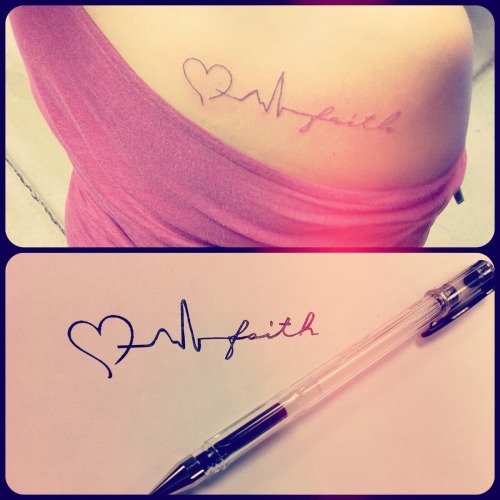
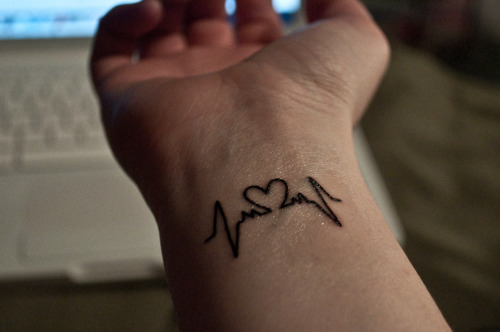
To sign off today, I am posting some ECG inspired tattoos (there are more than I ever realized).

"L'amour fou"
faith
ecg with a heart
ecg and arabic?
"follow your bliss"


Saturday, February 23, 2013

Sleep: a new found hobby and obsession

Last week I worked Tuesday night and had mandatory Wednesday morning education. I took the liberty of grabbing some blankets out of the blanket warmer at 0730 Wednesday morning and finding myself a fold out bed in a patient room in the unused medical behavioral unit that is on the IMCU/ICU floor. I snoozed deeply for one hour and then stumbled back out to grab some breakfast and coffee just before  class. The cook downstairs took pity on me because she made me extra eggs and bacon and kindly suggested I take the BIG cup for my coffee. I definitely got some weird, followed by concerned, looks from my coworkers upon still seeing me on the floor at 0900. I would like to point out I am not the first nurse to sleep in the med behavioral unit and I'm already booking my stay for a few weeks from now when I'll have a repeat of this ridiculous schedule!
The days that I don't sleep enough I end up playing catch up. When I did get to bed on Wednesday I was running on adrenaline I think because my body was compensating and didn't know what else to do! I slept for 3 hours, went to a basketball game with some family members, and then came home and was promptly in bed by 2200 and slept for 12 hours straight. Nothing was going to convince me to get out of bed otherwise.
Being on this night time schedule makes me so much more responsible when it comes to tracking my hours of slumber in an OCD sort of way ;)